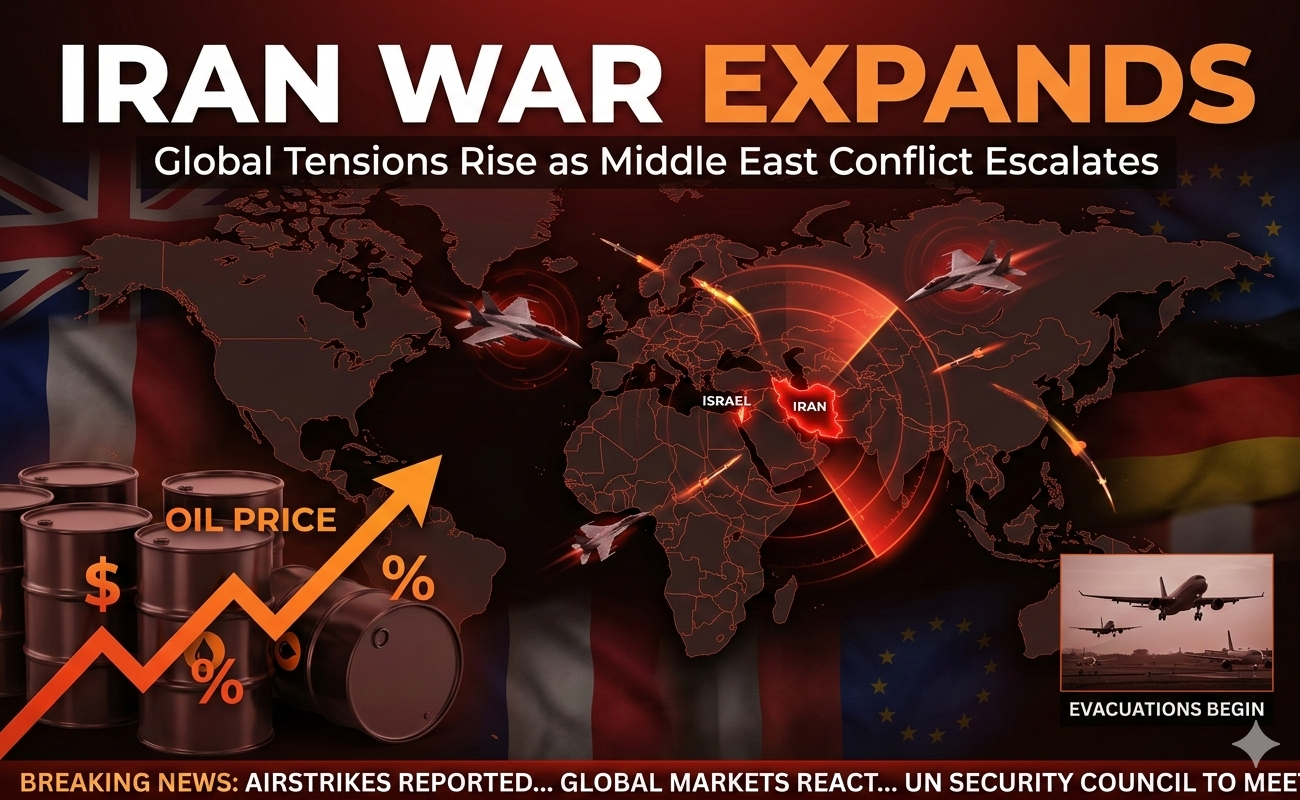
The Iran war is widening beyond the Middle East, raising global concerns as European countries increase military support for allies while attempting to maintain a defensive stance. As tensions escalate between Iran and Israel, financial markets are reacting, oil prices are rising sharply, and governments are rushing to evacuate citizens from the region.
Europe Slowly Drawn Into the Iran Conflict
European nations are becoming increasingly involved in the Iran conflict as they deploy military resources to protect allies and secure strategic interests. Officials emphasize that the support remains defensive, focusing on protecting shipping routes, military bases, and regional stability.
However, analysts warn that the growing involvement of European countries could signal a broader internationalization of the war if hostilities continue to escalate.
Security experts say that any direct confrontation involving additional global powers could significantly widen the scope of the conflict.
Donald Trump Weighs In on Iran’s Next Supreme Leader
US President Donald Trump said the United States should play a role in determining Iran’s future leadership following the death of Ali Khamenei, Iran’s long-time supreme leader.
Speaking to Axios, Trump criticized the possibility that Khamenei’s son could assume the position, calling such a succession “unacceptable.” His remarks highlight the geopolitical implications of Iran’s leadership transition at a time when the country is already engaged in a major regional conflict.
The debate over Iran’s next leader could shape the country’s military strategy and diplomatic relations in the coming years.
Oil Prices Hit Highest Level Since Biden Administration
Global financial markets are reacting to the intensifying war. US stocks extended their losses as fears about disruptions to Middle Eastern oil supplies pushed crude prices to their highest levels since the end of the administration of Joe Biden.
Energy analysts say that any threat to key oil shipping lanes in the Middle East could trigger further price spikes. Such increases would likely worsen inflation pressures worldwide and create additional volatility in global markets.
The Middle East remains one of the world’s most critical energy hubs, making geopolitical instability in the region a major concern for investors and governments.
Iran-Israel Strikes Continue Into Sixth Day
On the battlefield, there has been no sign of de-escalation. Missile and drone strikes between Iran and Israel continued into the sixth day of the conflict, increasing fears that the war could spread to neighboring countries.
Journalists from CNN have entered Iran, becoming the first US television network to cross into the country since the war began. Their reporting provides rare on-the-ground coverage of the conflict as tensions remain extremely high.
Military analysts warn that continued strikes could trigger retaliatory actions from regional allies, further escalating the situation.
Evacuations Accelerate as Travelers Remain Stranded
Governments around the world are intensifying evacuation efforts as thousands of citizens attempt to leave the Middle East.
Airlines are adding emergency flights while authorities organize charter operations to bring stranded passengers home. Despite these efforts, many travelers remain stuck due to disrupted airspace and security concerns.
Officials say evacuation operations may become more difficult if the conflict expands or if additional airports close across the region.
Global Attention on Next Phase of the War
With European military involvement increasing, oil markets reacting sharply, and evacuation efforts underway, the Iran war is rapidly becoming a major international crisis.
Experts say the coming days will be crucial in determining whether diplomatic efforts can prevent the conflict from expanding beyond the Middle East and triggering a broader global confrontation.